
Education
How Gold Buyers Test Gold
A trustworthy gold buyer tests your jewelry in front of you using several methods, not just one, before making an offer.
Published · Gold King, Houston TX
Reading the hallmark first
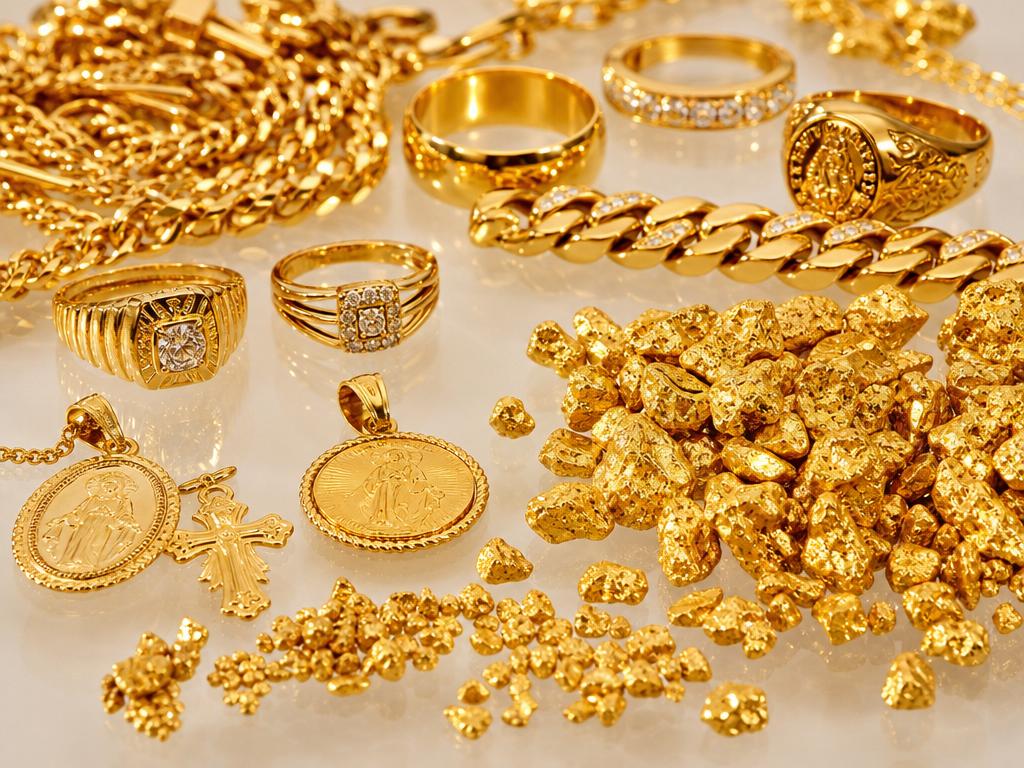
The first step in almost any evaluation is a visual check for a hallmark — the small stamp inside a ring band, on a chain's clasp tag, or on the back of a pendant. Stamps like 10K, 14K, 18K, 585, 750 or 916 tell a buyer the manufacturer's claimed purity before any testing begins. A hallmark is a starting point, not proof, because stamps can wear smooth, be applied to gold-filled or gold-plated pieces, or occasionally be counterfeit.
Because a stamp alone is never treated as final, a careful buyer will also look at the piece under magnification for solder joints, plating wear at high-contact points like the inside of a ring, and any second stamp that might indicate a repair. All of this happens before the item ever touches a testing tool, and you should be able to watch it happen at the counter rather than in a back room.
The magnet test — a fast first filter
Pure gold and most karat gold alloys are not magnetic, so a simple rare-earth magnet test is a quick way to rule out base metals disguised as gold or heavily plated steel and iron cores. If a piece is pulled strongly toward the magnet, it is not solid gold, full stop.
The magnet test has limits: some gold-colored alloys and certain platinum-group blends are also non-magnetic, so passing this test only means an item deserves further testing — it does not confirm karat or purity on its own. Any buyer who stops at the magnet test and makes an offer is skipping steps.
Acid testing and the file test
Acid testing is one of the oldest reliable methods. A small, usually unnoticeable scratch is made on an inconspicuous spot — often the inside of a ring shank — and a drop of nitric-acid-based solution calibrated to a specific karat (10K, 14K, 18K, and so on) is applied. If the gold in that scratch is at least that purity, the mark holds; if it is lower, the acid reacts and dissolves the metal, showing the buyer it does not meet that karat.
The file test is used alongside acid testing on questionable pieces, particularly plated jewelry. A fine jeweler's file removes a tiny amount of surface material so the acid tests the actual metal underneath rather than a plated layer that could give a false high reading. This two-step approach protects you as much as it protects the buyer, since it prevents a heavily plated item from being mistaken for solid gold.
Electronic conductivity and XRF analysis
Electronic gold testers measure electrical conductivity, since different metals and karats conduct electricity at slightly different rates. These devices are fast and non-destructive, making them useful for a first pass on jewelry a customer wants to keep intact, though they can be thrown off by mixed-metal alloys or unusual plating.
The most precise tool in most shops is an X-ray fluorescence (XRF) analyzer, which bombards a tiny spot on the item with X-rays and reads the elemental composition that bounces back — gold percentage, silver, copper, zinc and any other alloying metals, typically to within a fraction of a percent. XRF is non-destructive, does not require a scratch or file mark, and is considered the gold standard for verifying karat on finished jewelry, coins and bars.
- Visual hallmark and magnification check
- Magnet test to rule out base metals
- Acid test on a small scratch, by karat
- File test to check under plating
- Electronic conductivity reading
- XRF analysis for precise elemental composition
- Specific gravity (density) test on bullion or coins
Specific gravity testing for coins and bars
For bullion coins and bars, where scratching or filing is undesirable, buyers often use a specific gravity test. The item is weighed dry, then weighed again submerged in water; gold's density (19.3 g/cm³) is distinct enough from common counterfeits like tungsten-filled fakes that the math quickly reveals whether the piece is genuine. This method is non-destructive and works well as a cross-check against XRF results.
No single test is perfect in isolation, which is exactly why a legitimate buyer layers several of them. If you only see one quick check happen before an offer is made, that is a reasonable moment to ask what else they plan to verify.
What you should watch a buyer do
You are entitled to watch every step of testing. A legitimate buyer will weigh your items on a visible, calibrated scale, explain which test they are running and why, and show you the result — whether that is an acid color change, an XRF readout, or a conductivity number. None of this should happen out of sight.
At our Southwest Freeway store in Houston, every test is performed at the counter in front of the customer, and we're happy to explain each step as we go. Stop by during store hours (Monday–Thursday 9:30 AM–7:00 PM, Friday–Saturday 9:30 AM–8:00 PM, Sunday 12:00–7:00 PM), or call 713-997-0875 with questions before you come in — testing and a free gold appraisal take only a few minutes, and payment is cash on the spot if you accept our offer.
Ready to sell? Gold King buys these items in Houston every day — sell gold in Houston, cash for gold in Houston and jewelry buyer in Houston. Every appraisal is free, and payment is cash on the spot.
Questions about your item, or want a free in-person evaluation at 6809 Southwest Freeway, Houston?
Call Gold King at 713-997-0875Keep reading
These Gold King guides cover the same subject from different angles:
- EducationWhat Determines Gold Value? Full BreakdownLearn the market and item-specific factors — spot price, karat, weight, and craftsmanship — that determine what your gold is worth.
- EducationCommon Mistakes People Make Selling GoldAvoid the most common mistakes gold sellers make in Houston, from skipping comparisons to misunderstanding karat and cleaning jewelry.
- EducationSelling Gold in Houston: FAQ HubAnswers to the most common questions about selling gold, jewelry, coins and watches for cash in Houston, all in one place.
- EducationPawn Shop vs. Gold Buyer: Which Pays More?Compare pawn shop loans against selling to a dedicated gold buyer in Houston — how payouts, speed and ownership differ.
- EducationWhat to Bring to Sell Gold: ID, Papers & ChecklistYes, you need a photo ID. Here is the full checklist of what to bring when you sell gold, jewelry, coins or watches — and what you can leave at home.
Selling from outside central Houston? We buy from Houston, Bellaire and Sugar Land customers every week.
Start at the Gold King homepage for everything we buy, or contact our Houston store for a free appraisal and a same-day cash offer.
Questions about this guide
- Can acid testing damage my jewelry?
- The scratch made for an acid test is tiny and placed in an inconspicuous spot, such as the inside of a ring shank, so it is not visible during normal wear.
- Is XRF testing better than acid testing?
- XRF is more precise and non-destructive, which is why many buyers use it as their primary method, sometimes alongside a quick acid check for confirmation.
- Why did my gold fail a magnet test but still turn out to be real?
- It didn't — passing a magnet test only rules out obviously magnetic base metals. It does not confirm karat, which is why further testing is always needed.
- Can I bring my own tested gold and expect the same offer?
- A prior test result is useful information, but any reputable buyer will still verify karat and weight themselves before making an offer, since final payment is based on their own measurements.
- Do you test gold-filled or gold-plated jewelry the same way?
- Yes, the same layered process applies. A file test is especially important on plated items so the acid reads the base metal rather than a thin gold layer.