
Jewelry
Identifying and Valuing Antique Jewelry
Identifying the period a piece of jewelry came from is the first step to knowing whether it's worth more as an antique or as melt.
Published · Gold King, Houston TX
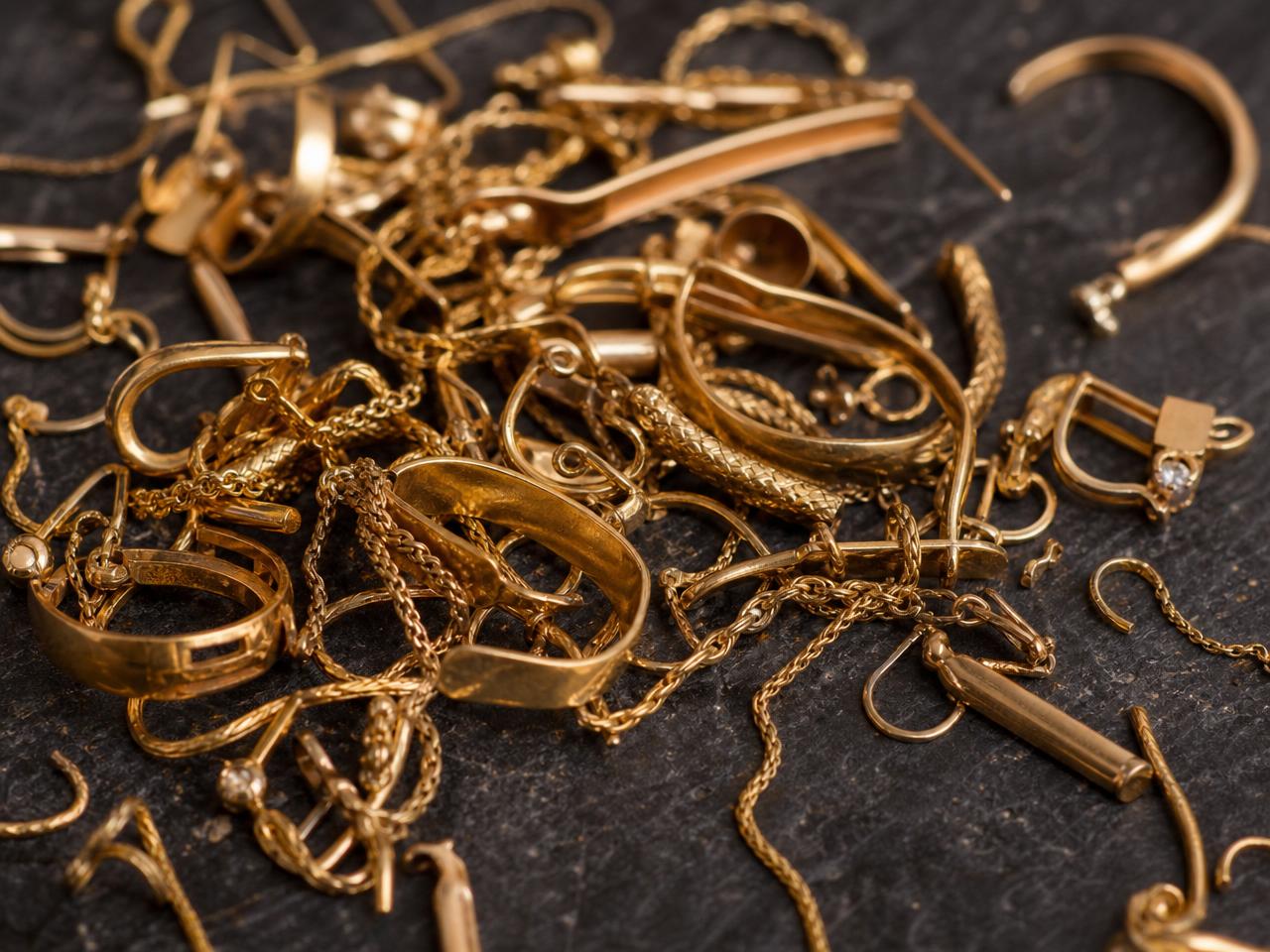
Why period identification matters
Two rings of identical gold weight and karat can have wildly different values if one is a plain modern band and the other is a documented Art Deco piece with original stones and craftsmanship. Melt value only accounts for the raw precious metal content; it says nothing about design, rarity, hand-fabrication, or the collector demand a specific era commands. Knowing roughly when a piece was made — even without a hallmark — helps you and an appraiser figure out which value applies.
Period identification relies on a combination of construction techniques, motifs, metal choices and stone-cutting styles that changed fairly consistently decade by decade. None of these cues are foolproof alone, but together they usually narrow a piece down to within a couple of decades.
Victorian and Edwardian eras (roughly 1837-1910)
Victorian jewelry spans a long reign and shifts in tone from romantic early pieces to somber mourning jewelry (often featuring jet, onyx or woven hair) later on. Look for rose-cut or old mine-cut diamonds, which have a softer, less symmetrical sparkle than modern brilliant cuts, along with hand-engraved detail and yellow gold or gold-filled construction, since white metals weren't yet common in mainstream jewelry.
Edwardian jewelry, following into the early 1900s, is airier and more delicate — filigree platinum work became possible once jewelers could reliably work the harder metal, producing lace-like settings, milgrain edging, and garland or bow motifs. Platinum with diamonds in this era, especially with fine filigree intact, often carries significant value beyond its metal content because the handwork can't be cheaply replicated today.
Art Deco and Retro eras (roughly 1915-1950)
Art Deco jewelry, at its peak in the 1920s and 1930s, is geometric and bold — think symmetrical step-cuts, contrasting colored stones like sapphire against diamond, and clean architectural lines instead of the flowing curves of earlier periods. Baguette and emerald-cut stones are common, and pieces often combine platinum with white gold for a sharp, monochrome look.
Retro jewelry from the 1940s reacted against Deco's precision with bigger, bolder, more sculptural pieces — rose gold and yellow gold came back strongly (partly because platinum was restricted for wartime use), and designs feature large, chunky forms, ribbon and scroll motifs, and often synthetic stones alongside real ones. A large rose gold cocktail ring with a big central stone and scrollwork is a classic Retro signature.
Mid-century and later collectible periods
Mid-century jewelry, roughly the 1950s and 1960s, moves toward cleaner lines again but with a more casual, wearable sensibility than Deco — brushed or textured gold finishes, nature-inspired motifs, and the beginning of more mass-produced fine jewelry as post-war prosperity widened the market. Designer and studio pieces from this era, when signed, can carry meaningful collector premiums.
Signatures and hallmarks, when present, are the most reliable identifiers of all — a maker's mark, a country hallmark, or a patent number can date a piece precisely and sometimes point to a specific designer or workshop, which is worth researching before assuming a piece is only worth its metal weight.
When antique value beats melt, and when it doesn't
Antique or period value typically wins when a piece has intact original stones, undamaged fine handwork like filigree or milgrain, a legible hallmark or maker's mark, or a design attributable to a known period or designer. These qualities create demand beyond the metal itself, from collectors and vintage jewelry buyers specifically seeking that era's look.
Melt value tends to win when a piece is damaged beyond reasonable repair, has been re-set with modern replacement stones that erase its originality, or is a common mass-produced design with no distinguishing period features. A qualified buyer should evaluate a piece both ways and tell you honestly which value applies rather than defaulting to melt out of convenience.
Have your antique jewelry evaluated in Houston
Gold King evaluates antique and vintage jewelry against both its metal content and its period, design and collector value, and we've done it for Houston sellers since 2008. Bring your piece to 6809 Southwest Freeway, open Monday–Thursday 9:30 AM–7:00 PM, Friday–Saturday 9:30 AM–8:00 PM and Sunday 12:00–7:00 PM, for a free appraisal with no pressure to sell. If you accept our offer, you're paid in cash on the spot. Call 713-997-0875 with questions.
Ready to sell? Gold King buys these items in Houston every day — sell estate jewelry in Houston, jewelry buyer in Houston and sell gold in Houston. Every appraisal is free, and payment is cash on the spot.
Questions about your item, or want a free in-person evaluation at 6809 Southwest Freeway, Houston?
Call Gold King at 713-997-0875Keep reading
These Gold King guides cover the same subject from different angles:
- JewelryEstate Jewelry Guide: Settling & Selling a CollectionA practical guide to sorting a full jewelry box, handling executor paperwork, and selling estate jewelry for its real value.
- JewelryJewelry Appraisal Guide: Insurance vs. ResaleWhy an insurance appraisal and a resale offer on the same piece of jewelry can be very different numbers, and what each is for.
- DiamondsHow to Sell a Diamond: 4Cs, Reports & PricingUnderstand the 4Cs, GIA vs. other reports, lab-grown vs. natural, and how diamond resale pricing really works before you sell.
- JewelryEngagement Ring Resale: What They're Really WorthWhat an engagement ring is realistically worth on resale after a broken engagement, divorce or upgrade, and how to get the most for it.
Selling from outside central Houston? We buy from Houston, Bellaire and The Woodlands customers every week.
Start at the Gold King homepage for everything we buy, or contact our Houston store for a free appraisal and a same-day cash offer.
Questions about this guide
- How can I tell if a piece is genuinely antique versus a modern reproduction?
- Construction details are the best clue — hand-cut stones, old-style prongs, and period-appropriate metal choices are hard to fake convincingly. A hallmark or maker's mark, if present, is the strongest evidence and can be researched to confirm origin.
- Is all old jewelry worth more than its melt value?
- No. Age alone doesn't create value — condition, originality, craftsmanship and design all matter. A damaged or heavily altered older piece can be worth exactly its melt value and nothing more.
- What's the difference between antique and vintage jewelry?
- Antique generally refers to pieces roughly 100 years or older, while vintage covers a broader, more recent range, often from the mid-20th century onward. Both can carry collector value beyond metal content.
- Should I clean or repair an antique piece before selling it?
- No. Cleaning or repair can remove patina or original finish that collectors specifically value, and it won't change a melt-based offer. Bring it as-is and let an appraiser evaluate the original condition.